
Multimodality
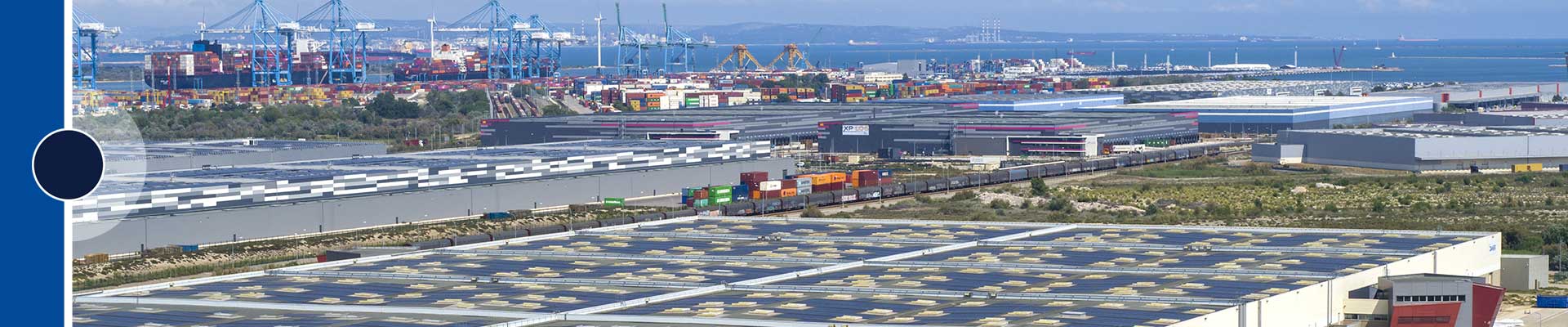
Marseille Fos is an multimodal hub for inland services. The Port of Marseille Fos develops maritime and logistics solutions on a European-scale hinterland designed to enhance its attractiveness and offer new services to its operators and customers. The Port coordinates and sets up an integrated supply chain that promotes the massified rail and river inland services.
The only port in the western Mediterranean to benefit from the four pre post transportation modes (rail, river, road, pipeline), it offers, with the operators that serve it, a complete multimodal network adapted to a vast European hinterland.
ROAD SERVICES
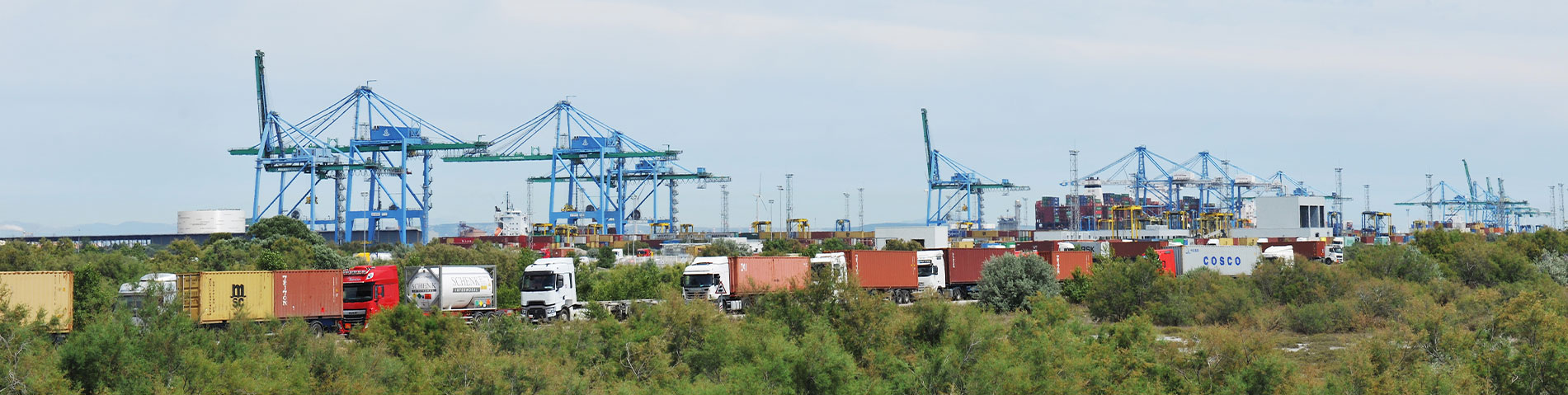
The modal share of road transport is less than 80%. All the terminals are connected to the motorway network, making it possible to serve the whole of Europe. The Port has LNG fuelling stations and will have the first hydrogen distribution station for long-haul trucks in Europe at the beginning of 2022.
RAIL SERVICES
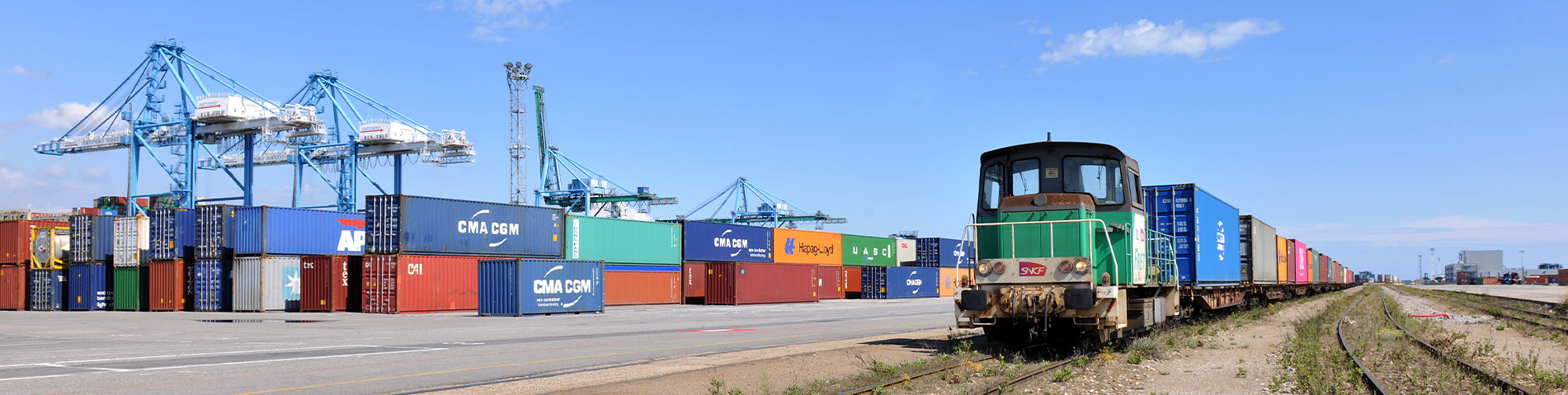
205 000 EVP | + 5% vs 2024
Rail transport now accounts for 15% of containerized freight transport.
Ambitions
Consolidate and expand the port's hinterland, in particular by developing a vision for an axis linking the southern coast of Europe. The port of Marseille Fos is a major Euro-Mediterranean gateway from which efficient and sustainable rail-sea chains serve customers and regions.
This strategy addresses environmental challenges and promotes responsible economic growth. For example, the transfer of containers from the open railway line to Perrier between Vergèze and Fos-sur-Mer in 2019 alone will remove 27,000 trucks from road traffic on this axis.
Marseille Fos: the power of rail for efficient, low-carbon logistics
Modal shift is central to the Port's ambition to transition to more sustainable logistics. With the highest modal share of rail and river transport among French ports, it is setting the standard for carbon-free transport.
Regular destinations
for combined transport
MT traffic/year
on the RFP
Average annual traffic
in the ZIP area
With growth of nearly 200% in rail modal shift over the last five years, the Port of Marseille Fos is demonstrating its commitment to supporting the development of alternative modes of transport to road.
- +200 commercial rail offers for combined transport
- 20 destinations, including 5 in Europe
- Service provided by 5 combined transport operators: Naviland Cargo | Greenmodal | T3M | Ferovergne | Delta rail
Consult the rail services brochure
The port of Marseille Fos with its partners develop numerous rail investment projects both in Fos and Marseille to support the growth of the railway traffics according to the needs of the customers of the port. They are developped in complementarity with the other facilities and projects of the surrounding logistics crown.
The objective is that solutions in massified modes can be proposed to address both the needs concerning the flows in transit on the terminals as well as those of the customers, logisticians and industrialists implanted in the industrial-port zone: containers combined transport, conventional, bulk…
Consult the reference document
RIVER SERVICES
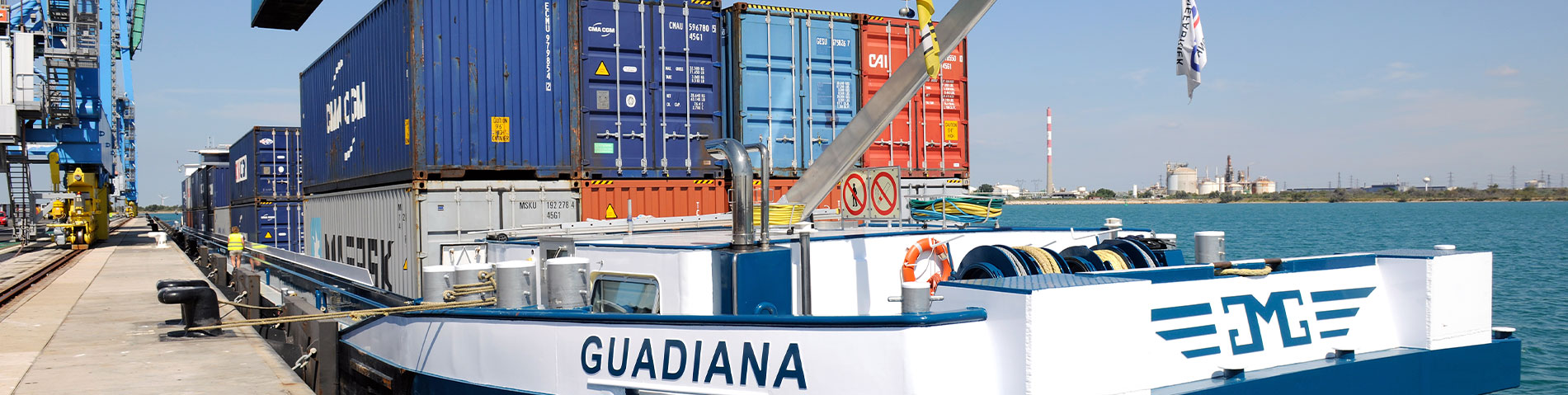
The Port of Marseille Fos is connected to numerous multimodal platforms along the Mediterranean-Rhône-Saône axis connected to its hinterland and benefits from a geographical location, nautical conditions and land availability which are all decisive assets.
The only port in the South European range connected to the large-gauge river network (European class type «5B»), this mode ibeing a true vector of differentiation compared to other seaports.
The modal share of the river mode for containerized traffic represents 6% of the transport of goods and the port aims to triple the volumes transported with this massified mode.
5 Regular service per week to Valence, Lyon and Macon
of traffic
Km large gauge network
Created on the initiative of the Port of Marseille Fos in 2008, Medlink Ports groups together the multimodal platforms of the Mediterranean-Rhône-Saône axis (seaports + inland ports) as well as river infrastructure managers and developers (VNF and CNR) and rail managers (SNCF Réseau).
The dynamic of Medlink Ports in favor of modal shift intensifies on the axis Mediterranean-Rhône-Saône and the multimodality is confirmed : more than 40 members now compose the association with the arrival in 2019-2020 of 10 new members (permanent and partners), and 26 providers are now Medlink Safe accredited (including shipping companies).
Customers of the port of Marseille Fos opting for a river solution benefit from many advantages developed by Medlink Ports, including :
- Free support by the Medlink logistics advisor
- Process to optimize exportation of dangerous goods containers
- Possibility of additional storage days
PIPELINE SERVICE
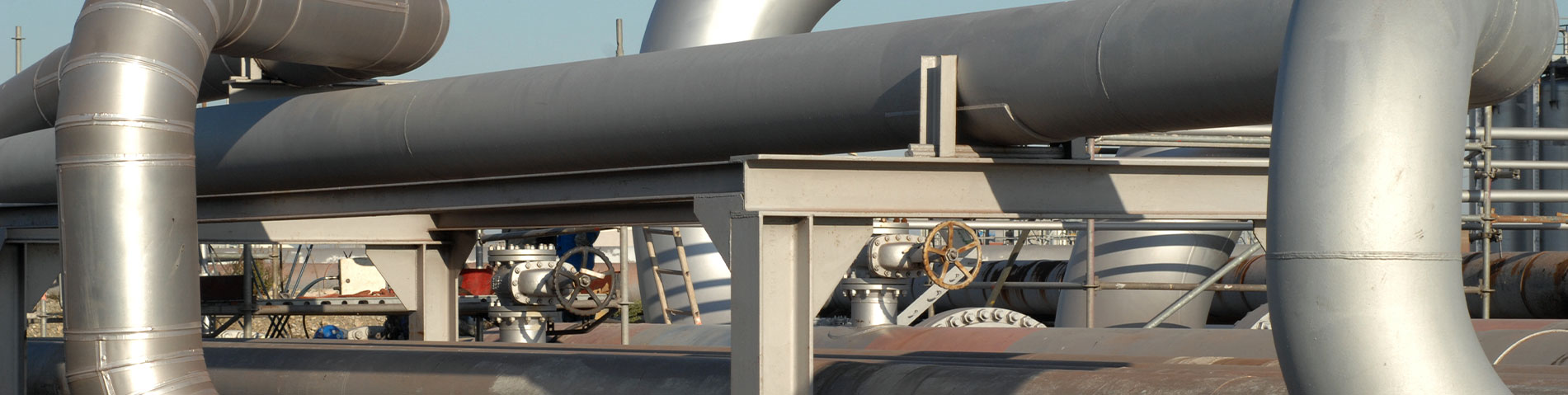
The pipeline network at Fos allows safe transportation of liquid bulk, mainly crude or refined oil and oil products to European depots and refineries through a vast international network.
- Geosalt Pipelines : Import that serve SPSE, SPMR and NATO depots.
- SPSE pipeline : Transports liquid oil and oil products from Fos to refineries in Saint Quentin Fallavier (39) and Gennes (Switzerland).
- SPMR pipeline : Transports the products from the Fos/Etang de Berre refineries to the depots of the French Riviera, the Rhône Valley, the Lyon region, Savoie and Switzerland by connecting to the Sappro pipeline.
- NATO pipeline : this is the common defence pipeline, connected to the CEPS (central European pipeline system) for feeding NATO bases in Europe.
Player of differentiation compared to the other marine ports. The modal share of the river on the containerized traffic represents 6% of the transport of the goods and aims to triple the volumes transported with this mass mode.
